Delta companion certificate value
There is a certificate sitting in your SkyMiles account right now, or there should be.
CardDecide EditorialThe Fee Ledger2026Re-verify by Dec 2026
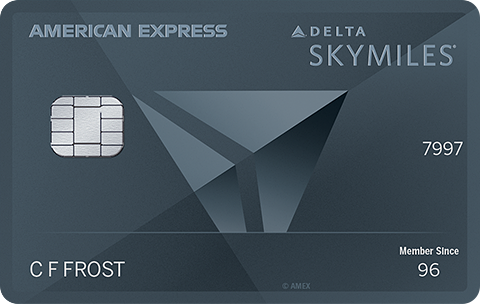
Delta Reserve · $650live feeThe fee, at a glance · Delta Reserve
Issuer-published annual fee · tracked live from CardDecide's dataset
2024 → 2026
There is a certificate sitting in your SkyMiles account right now, or there should be. It arrived when your Delta SkyMiles Platinum or Reserve card renewed, it has an expiration creeping toward it, and every few weeks you remember it exists, feel a small pang, and get distracted. The question that brought you here is whether the thing is worth the hassle.
Here is the honest answer. The certificate's value equals the round-trip fare your companion would have paid on a trip you were both taking anyway, minus taxes and fees that officially run $22 to $250. On a $340 domestic Main Cabin ticket with typical domestic taxes, the net is roughly $260. On the Reserve card, where the same benefit books First, Premium Select, or Comfort+, the net can clear $500 on premium itineraries. And if you fly solo, the certificate is worth exactly zero, which should change your card decision rather than your mood. Let's put numbers on all of it.
1Read the terms before you set a value
Most mispricing of this benefit starts with people valuing it as "a free ticket." It is not a free ticket. It is a buy-one-get-one mechanism with rules, and the rules are where the value lives or dies.
The official mechanics (news.delta.com, June 4, 2026; delta.com companion certificate page): the certificate is issued annually after your card renewal. On the Platinum card, it covers a Delta Main Cabin round trip within the domestic United States, the Caribbean, or Central America. On the Reserve card, it is valid for Delta First, Premium Select, Comfort+, or Main Cabin, a materially wider cabin set. The companion pays taxes and fees between $22 and $250 on itineraries of up to four flight segments. Delta Basic fares are excluded, which means the cheapest fare class on the screen is never the one the certificate can touch. A round-trip booking is required; this is not a one-way benefit.
One frequently misread number deserves care. The official taxes-and-fees range is $22 to $250, and that range spans a wide territory: NerdWallet's February 27, 2026 breakdown put domestic certificates at a maximum of roughly $80, with the $250 ceiling typically reached on international itineraries. The official range governs, but for planning a domestic trip, budgeting around the lower domestic figure is the more realistic assumption. Every scenario below labels which figure it uses.
New since June 4, 2026: the certificate is now redeemable toward the flight portion of a Delta Vacations package. If your household books air-inclusive packages, that change converts the certificate from a flights-only tool into something spendable on a bundled vacation, which is the single biggest usability improvement this benefit has had.
The cabin distinction between the two cards deserves one more beat, because it is where most of the benefit's spread lives. On Platinum, the certificate prices against Main Cabin fares, the same seats everyone comparison-shops, so its net value tracks ordinary coach pricing. On Reserve, it prices against First, Premium Select, and Comfort+, cabins whose fares can run to multiples of coach on the same routes. Same mechanism, different denominations: a Platinum certificate competes with a $300 ticket for your attention, while a Reserve certificate can attach itself to a $700 one. When you read that a certificate "can be worth over $500," the statement is almost always describing the premium-cabin version of the benefit.
2Run the only valuation that matters
Forget "up to" language and forget the fare you wish existed. The formula is: value equals the companion's round-trip fare on a route and dates you would have booked anyway, minus the taxes and fees the companion actually pays. Anything else is marketing.
Three worked scenarios, with every assumption stated. Scenario A is the standard domestic Platinum case: companion's Main Cabin round trip prices at $340, domestic taxes and fees come to $80. Net value: $260. Scenario B pushes the geography: a Caribbean itinerary where the companion's fare is $480 and the taxes and fees run $150, within the official range for that routing. Net value: $330. Scenario C is the Reserve case: the companion's Comfort+ round trip prices at $650, with $80 in taxes and fees. Net value: $570, before considering that the same itinerary in First could price far higher.
| Scenario | Card | Companion's fare (assumption) | Taxes and fees (assumption) | Net certificate value |
|---|---|---|---|---|
| A. Domestic Main Cabin | Platinum | $340 | $80, domestic typical | $260 |
| B. Caribbean Main Cabin | Platinum | $480 | $150, mid-range | $330 |
| C. Comfort+ round trip | Reserve | $650 | $80, domestic typical | $570 |
| D. The fail case | Either | You fly solo | n/a | $0 |
Scenario D is the one nobody prices. If no companion flies with you on a qualifying itinerary this year, the certificate produces nothing, and its value is not deferred or banked. It simply expires, which is why the solo-traveler case belongs in card-choice conversations rather than in hopeful to-do lists. The full renewal context for the Delta family is in our 2026 Delta renewal math piece.
A fifth line belongs under every version of this table: time cost. The certificate requires a round trip you book deliberately, on eligible fares, inside its validity window, and the booking itself can consume an evening of fare searching. Nobody bills you for that evening, but value that requires unpaid coordination is worth slightly less than its dollar figure, and households that outsource travel planning to the busiest adult should discount accordingly. It is also why the certificate pairs poorly with spontaneity: inventory searched at the last minute is thinner, and the eligibility filters, no Basic fares, four segments, qualifying geography, compound with every constraint you add.
3When one certificate carries the card
Now connect the scenarios to the fee, because this is where the certificate either justifies its card or does not.
The Platinum card costs $350 a year. Take Scenario A's $260 net and set it against the fee: the certificate alone covers roughly three-quarters of it. Fill the remaining $90 with the second free checked bag that all Delta tiers gained on June 4, 2026, valued at Delta's current second-bag rates on a trip or two, and the ledger closes for a household that checks bags. In Scenario B, the certificate's $330 nearly clears the fee by itself before any other benefit registers. That is the honest arithmetic behind the common claim that "the certificate pays for the Platinum card": it is conditionally true, and the condition is a companion ticket you would have purchased anyway at a realistic fare.
The Reserve card costs $650, and its certificate is the core of the case for it. Scenario C's $570 net approaches the fee before you count Sky Club access when flying Delta or anything else the card does. A frequent flyer who books the certificate in First or Premium Select once a year is running the closest thing to a guaranteed win this benefit structure offers. An occasional flyer who lets it lapse is paying $650 for the second-best version of everything else, and should probably be reading about the co-brand downgrade ladder instead.
Two cautions keep the arithmetic honest. First, substitution is the whole test: a companion fare you would never have paid, because you would have driven or flown a different airline, is not value the certificate created. Second, the certificate is use-it-or-lose-it, so its value must be booked within its validity window, not merely intended. The annual fee break-even method formalizes this counting, but the certificate-specific version is simple: net certificate value plus benefits you will actually use, divided against the fee, once a year.
Run the same test at the household level and the picture can improve. A Platinum couple where both partners would have bought tickets anyway is the textbook case, but so is the family of four where the certificate absorbs one parent's seat on the annual trip, or the Reserve holder whose partner prefers premium cabins and would have paid for them regardless. In each arrangement the certificate is not creating a trip; it is subsidizing a seat that was already in the plan. The moment the certificate starts creating trips, a weekend here, a detour there, that exist mainly because the benefit would otherwise expire, its net contribution has turned negative and the card's renewal case should be re-audited rather than defended.
4Booking it without the runaround
The certificate rewards the organized and punishes the casual, and community experience bears that out. Travelers reported friction with certificate bookings into mid-2026: fare-class availability quirks on eligible routes, and the general reality that the bookable inventory is a subset of what the search screen shows (Thrifty Traveler, June 11, 2026; community reports, not issuer policy). The workarounds are procedural rather than clever.
Book early in the certificate's life, not at its end. Eligible Main Cabin inventory on popular routes thins as dates approach, and a certificate hunted during its expiration month is a certificate booked on someone else's schedule. Search with flexible dates and consider off-peak days, since the companion's fare class must be available for the certificate to attach to it. Remember the structural limits as you search: round trip only, up to four flight segments, no Basic fares, and the Platinum version restricted to Main Cabin in the domestic United States, the Caribbean, and Central America. The Reserve version adds First, Premium Select, and Comfort+ to the eligible cabins.
Check the certificate's terms inside your Delta account before planning around it. Certificates are issued after renewal, and an unused certificate expires by your next renewal cycle; the precise expiration and booking windows are stated on the certificate itself in your account, which is the authoritative source for your specific benefit. Treat any third-party summary, this article included, as a map rather than the terrain.
If a Delta Vacations package is in your future, the June 2026 change deserves attention during planning: the certificate now applies to the flight portion of a package, which means the certificate can be spent inside a bundled vacation rather than competing for standalone award-worthy fares. For households that already buy packages, that quietly removes the most common failure mode this benefit has historically had, the standalone round trip nobody needed.
5A cousin worth comparing: the Marriott free night
The certificate has a close relative in the hotel world, and comparing them clarifies both. Marriott's Boundless card carries a $95 annual fee and grants a free night award every account anniversary, redeemable at properties priced at up to 35,000 Bonvoy points, with the points-difference rule applying when dynamic pricing runs higher. We walk through that benefit's renewal math in the Marriott free night award piece.
The structural kinship is what matters here. Both benefits are use-it-or-lose-it credits issued at renewal. Both are valued not at a face number but at what you would have booked anyway: the Marriott award at the night you would have paid for, the Delta certificate at the companion fare you would have paid. Both punish the disorganized identically, by expiring. And both are the load-bearing benefit of their respective cards, which means an honest renewal audit starts by asking whether that single benefit clears the fee in a normal year, not a best-case year. A household holding both cards can run the same five-minute audit twice: certificate booked or not, free night booked or not, and the answer to keep or downgrade falls out of the totals.
6If the certificate will go unused
Suppose the honest answer is that no companion trip is happening this year. Then the certificate is $0, and the card that exists to produce it needs a different justification.
For a Platinum holder, that is a thin position. Remove the certificate and the remaining benefits have to carry $350, which for an occasional Delta flyer they rarely do; stepping down to Gold, with its $120 annual rideshare credit and the second free checked bag added in June 2026, usually fits a lighter travel year better. For a Reserve holder grounded for the year, the downgrade conversation starts one rung higher. The moves themselves, and what each rung keeps and drops, are mapped in the Delta renewal guide and the ladder guide linked there.
Laid out as a decision list: if a companion trip with a realistic fare is already on the calendar, book the certificate against it and let the card's other benefits argue about the remainder. If a companion might travel but the trip is speculative, set a calendar date ninety days before the certificate's printed expiration and decide then, with real fares in front of you. And if no companion trip is plausible this year, drop the certificate from your mental accounting entirely; it is worth zero, and pretending otherwise inflates the card's perceived value by exactly the amount you keep not collecting.
And if this year's certificate is simply expiring unused while the card still earns its keep on other benefits, let it go without ceremony. Squeezing a marginal itinerary to rescue a benefit you would not otherwise book is how "use-it-or-lose-it" turns into "lose-it-twice," once in expired value and once in a trip nobody wanted.
Before your next renewal posts, run the certificate through the renewal checklist: confirm the certificate exists in your SkyMiles account, confirm its expiration date as printed there, and either attach it to a real itinerary or fold its absence into your keep-or-downgrade decision. The certificate is the most misvalued benefit in travel cards precisely because people treat it as either a windfall or a chore. It is neither. It is a discount of known size on a specific kind of ticket, and now you know how to price it.
Sources & provenance
- Delta News Hub — June 4, 2026 announcement: companion certificates now redeemable toward Delta Vacations flight portions; second checked bag and Gold rideshare context (https://news.delta.com/, June 4, 2026)
- Delta companion certificates page — issuance after renewal, cabin scope by card, $22-$250 taxes and fees, four-segment cap, Basic fare exclusion (https://www.delta.com/, current as of August 2026)
- NerdWallet — domestic certificate taxes typically near $80 versus the $250 international ceiling (https://www.nerdwallet.com/, February 27, 2026)
- Thrifty Traveler — traveler friction reports on certificate booking availability and fare-class quirks; community corroboration, not issuer policy (https://thriftytraveler.com/, June 11, 2026)
- Marriott card pages — Boundless $95 annual fee, anniversary free night award at up to 35,000 Bonvoy points (https://www.marriott.com/, current as of August 2026)
Figures are sourced from issuer pages and community reports, verified on the dates shown, and may have changed. Always confirm current terms with the issuer. Not financial advice.
Keep reading
All articlesTheory is cheaper than the fee.
Run your own card through the same equation in about two minutes.
Check my card