Delta card renewal math, June 2026
The renewal notice for your Delta SkyMiles card arrived, and this year you almost dismissed it on reflex.
CardDecide EditorialThe Fee Ledger2026Re-verify by Dec 2026
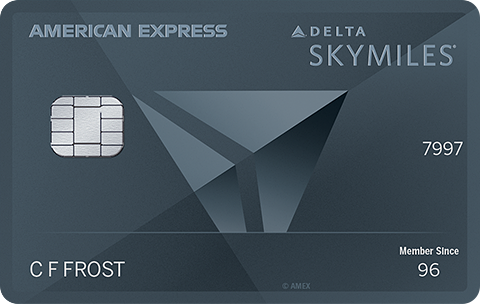
Delta Reserve · $650live feeThe fee, at a glance · Delta Reserve
Issuer-published annual fee · tracked live from CardDecide's dataset
2024 → 2026
The renewal notice for your Delta SkyMiles card arrived, and this year you almost dismissed it on reflex. Airline cards have spent two years raising fees and shaving benefits, so when a headline said Delta added benefits in June, the reasonable assumption was that a fee increase was hiding underneath it. Not this time. On June 4, 2026, Delta announced real enhancements with no fee increases: a second free checked bag on domestic Delta flights for every consumer tier, a $120-per-year rideshare credit on the Gold card, and companion certificates that now apply to the flight portion of Delta Vacations packages (news.delta.com, June 4, 2026).
That changes the renewal math, tier by tier. Gold at $150 now has the clearest benefits stack it has ever had, and it is quietly the value tier of the lineup. Platinum at $350 remains the certificate card, with the certificate itself improved. Reserve at $650 remains an access-and-premium-cabin card that only pays for frequent Delta flyers. For most renewals in the 2026-27 cycle, the math has tilted toward keeping, provided you count only benefits you will actually use.
What changed on June 4, 2026
Start with the official list, because everything below hangs off it. Delta's announcement covered consumer and business versions of the Gold, Platinum, and Reserve cards alike, and the fee schedule did not move: Gold stays at $150, Platinum at $350, Reserve at $650 (news.delta.com, June 4, 2026; delta.com card pages, current as of August 2026).
The substance: first, every tier now includes a complimentary second checked bag on domestic Delta-operated flights. Second, Gold cardmembers who are enrolled get a $120 annual rideshare credit, delivered as $10 per month, available after card renewal. Third, companion certificates, the annual benefit on Platinum and Reserve, are now redeemable toward the flight portion of Delta Vacations packages, which materially widens where the certificate can be spent. Fourth, cosmetics: refreshed card designs, including a Slate Grey Reserve option marking the partnership's thirtieth anniversary.
The announcement also carried limited-time welcome offers that ran through July 15, 2026, now lapsed and mentioned here only for the record. Renewal decisions run on benefits, not bonuses.
Two implementation details from the announcement affect when the math starts working for you. The second-bag benefit took effect June 4, 2026, so it applies to qualifying travel now rather than waiting for your personal renewal date. The rideshare credit, by contrast, is described as available after card renewal and requires enrollment, so Gold holders should confirm the enrollment is active on the card's benefits page rather than assuming the credit simply appears; credits that require enrollment have a long industry history of not enrolling themselves. The gap between a benefit that starts automatically and one that starts when you activate it is real captured value, and it is exactly one settings screen wide.
One deliberate omission from this article: a dollar value for that second bag. Bag-fee levels were not verified in our research and they move often, so the honest treatment is to value the benefit against Delta's current second-bag rates at the moment you fly, not against a number we cannot stand behind. The valuation method below works with whatever the current rate is.
Gold at $150: the quietly strong case
The Gold card used to be the tier people downgraded onto and then forgot. The June 2026 changes make it a card that can carry its own fee, and the arithmetic is unusually legible.
Item one: the $120 rideshare credit. It arrives as $10 per month after your renewal, requires enrollment, and presumably rides on the monthly-discipline model every credit of this shape uses; $10 that goes unspent in a month does not roll forward into a $20 January. Capture the full twelve months and the credit covers 80% of the $150 fee before you board a plane. Miss half the months and you have captured $60, which is a different card.
Item two: the second free checked bag on domestic Delta flights. Value it against current second-bag rates when you fly. A household taking two domestic round trips a year, both travelers checking a second bag each way on this card's benefit, is running four second-bag fees through the card's benefit. Whatever those four fees cost at booking time, that amount lands on the benefit side of the ledger, and for many two-traveler households it alone rivals the fee's remainder after the rideshare credit.
Notice what is missing from this case: earn rates. Gold's category multipliers were not part of what we verified for this article, so treat the everyday earning as a bonus you should confirm on the current card page rather than a pillar of the math. The renewal case stands on the benefits stack alone, which is the honest way to want a card. This "quietly the value tier" reading is our analysis of the official benefit list, not a Delta claim.
Worked scenario, assumptions labeled. Assume full rideshare capture ($120), two domestic round trips with four second-bag fees totaling an amount you compute from Delta's posted rates when you book, and no value assigned to earning categories. The fee is covered when those two items sum past $150, and the rideshare credit alone leaves only a $30 gap. For a couple that checks bags and uses rideshare monthly, the 2026-27 renewal is close to a formality. For a solo traveler who never checks a bag and takes an airport car twice a year, the gap stays open, and the real question becomes whether Platinum's certificate or a downgrade fits better.
Between those poles sits a commuter case worth naming: a Gold holder who flies Delta often but alone. Rideshare capture stays easy, $120 is $120 regardless of cabinmates, but the second-bag benefit only prices against a checked second bag, which solo business travelers frequently do not carry, and no certificate exists at this tier to pick up the slack. For that traveler the card reduces to a $30 question after rideshare, a fair fight between the fee and whatever Delta's current second-bag rate is worth on the trips where a bag does get checked. That is Gold's new personality in one sentence: it clears its fee through routine behavior, riding to the airport and checking luggage, rather than through the trip-of-the-year behavior that premium tiers lean on.
Platinum at $350: still the certificate card
The Platinum card's renewal case has always run through the companion certificate, and the June changes improved the certificate rather than replacing the logic.
The mechanics, officially: one certificate per year after renewal, for a Delta Main Cabin round trip in the domestic United States, the Caribbean, or Central America. The companion pays taxes and fees between $22 and $250, with itineraries capped at four flight segments. Basic Economy fares are excluded. New in June 2026: the certificate is now redeemable toward the flight portion of a Delta Vacations package, which converts it from a pure-flight benefit into something a vacationing household can spend (news.delta.com, June 4, 2026; delta.com companion certificate page).
A worked scenario with the assumptions on the table. Suppose your companion's round-trip Main Cabin fare on a trip you would both take anyway prices at $340, and domestic taxes and fees land around $80, the typical domestic figure per NerdWallet's February 27, 2026 breakdown; the official range is $22 to $250 and domestic itineraries usually sit toward the low end. Net certificate value: roughly $260. Add the second-bag benefit on the same trip and the stack approaches the $350 fee without touching a single earn multiplier. Push the companion fare to $450, as Hawaii and peak-season Caribbean itineraries can, and the certificate alone nearly clears the fee.
The failure mode is equally clear. If you do not fly with a companion on a qualifying route in a given year, the certificate is worth exactly $0, and Platinum's remaining benefits have to justify $350 on their own, which is a hard sell for occasional flyers. We give the certificate the full valuation treatment, including the premium-cabin angle and the booking mechanics, in our companion certificate walkthrough.
Reserve at $650: access plus a premium-cabin certificate
The Reserve card is the least changed by June's announcement and the most dependent on how you fly.
Its certificate is the most valuable version of the benefit: valid in Delta First, Premium Select, Comfort+, or Main Cabin, on the same round-trip structure. A companion's Premium Select fare can price several times the equivalent Main Cabin fare, and the certificate's net value on premium-cabin itineraries can exceed $500 in realistic scenarios, before the $22-to-$250 taxes are subtracted. Frequent premium-cabin travelers get the clearest read here: one well-spent certificate plus lounge access is the core of the $650 case.
The lounge benefit is the other pillar: Reserve cardmembers receive Delta Sky Club access when flying Delta, with visits resetting February 1, under the policy Delta set in early 2025. The caveat is guests: bringing guests into the club is restricted unless the cardmember spends $75,000 a year on the card, and the exact guest terms should be checked against Delta's current policy rather than memory. The 2025-26 period has been a reset year for lounge guest rules across every issuer, a shift we track in the 2026 lounge access reset. Value the access honestly: if you fly Delta often enough to enter a club most trips, the benefit is real; if you fly Delta four times a year, it is scenery.
The second checked bag applies here too, and for a premium-cabin traveler it is mostly redundant with included baggage allowances, which is worth remembering when you tally. Stack the Reserve ledger honestly and it reads like this: a premium-cabin certificate whose net value can exceed $500 on the right itinerary, lounge access on every Delta departure, and a set of smaller benefits that only matter to already-heavy travelers. What the $650 does not include is a single benefit that works when you are not flying Delta. That is the tier's whole personality, and it is why the renewal question at this level is less arithmetic than calendar: count your Delta departures from the past twelve months, and the count answers the question for you. The honest Reserve verdict: for frequent Delta flyers who use the certificate in a premium cabin and enter Sky Clubs regularly, the $650 can be justified; for everyone else, the Platinum tier or a downgrade conversation beckons, and our renewal math overview frames that calculation.
The ladder below you
If the math points down rather than out, the Delta Amex family is a ladder, not a cliff. Reserve holders can step down to Platinum and keep a certificate, in a narrower cabin set. Platinum holders can step down to Gold and keep bags plus the rideshare credit while dropping the certificate. Delta also fields a no-fee entry card below Gold, though its current terms were not verified in our research; check the card page before assuming any particular perk. The full walk-down, including what you lose at each rung, is mapped in the co-brand downgrade ladders guide.
Two rules govern the climb down. American Express typically allows product changes after twelve months on the account, and product changes do not award welcome bonuses, ever. The once-per-lifetime bonus rule also caps the "cancel and reapply later" strategy that people sometimes propose for co-brands: reapplying for a card you previously held is unlikely to yield a second bonus (The Points Guy, May 11, 2026; NerdWallet, July 24, 2026). Treat downgrades as account surgery, not as bonus arbitrage.
While the other airlines raised
Context matters in a renewal year, because "is this card worth it" is partly a question about the market. United overhauled its cards in March 2025 and raised fees: Explorer went from $95 to $150, Quest from $250 to $350, and the 10,000-mile award discount now requires $10,000 in annual spend to stay active. American's Executive card went from $595 to $695 as part of its August 2026 refresh. Hilton's Aspire climbed from $450 to $550. Delta, alone among the major co-brand families this cycle, added benefits while holding fees flat.
You can see the same pattern from the industry side: analysts describe co-brand economics polarizing toward premium perks on one end and no-fee cards on the other, squeezing the middle. Wall Street notices the same thing from the revenue side, with Morgan Stanley research published June 10, 2026 projecting airline and hotel co-brand card revenues could grow roughly fourfold over the next decade. Issuers are not debating whether to invest in these programs; they are debating where, and Delta's June bet was the middle of the ladder while its competitors bet on the top. Delta's June move reads as a deliberate play to make the middle tiers, especially Gold, feel defensible. As renewal leverage, that matters. An issuer that just improved your card is an issuer with less reason to buy your loyalty back with retention credits, and more reason to hold firm if you call to threaten cancellation. We cover the other airlines' direction in the AAdvantage transition and Executive refresh piece.
Retention data is thin. The move still works.
A note of honesty on retention: community datapoints for Delta co-brand retention offers are noticeably thinner than the deep archives that exist for the Amex Platinum and Chase Sapphire lines. That absence is not evidence that offers never happen; it is evidence that you should not walk into the call expecting a documented pattern. The standard mechanics still apply: call or chat after the fee posts, when your leverage is at its seasonal peak, say plainly that you are weighing whether the card stays, and see what the system offers. Offers are account-specific, never guaranteed, and community reports are reports rather than policy. Our retention timing and script guide covers the conversation itself.
The Delta renewal of 2026-27 is a rare frame: a card family that got better while you were holding it. Gold stacks benefits legibly now, Platinum's certificate carries more of its fee than before, and Reserve remains what it always was, a frequent-flyer instrument. Run your own travel through the stacks above, price the second bag at whatever Delta charges when you book, and put the totals through our annual-fee calculator before the fee posts.
Sources & provenance
- Delta News Hub — June 4, 2026 enhancement announcement: second checked bag all tiers, Gold $120 rideshare credit, companion certificates on Delta Vacations flight portions, no fee increases, lapsed welcome offers (https://news.delta.com/, June 4, 2026)
- Delta card pages — Gold $150, Platinum $350, Reserve $650; benefit enrollment details (https://www.delta.com/, current as of August 2026)
- Delta companion certificates page — certificate scope, $22-$250 taxes and fees, four-segment cap, Basic fare exclusion (https://www.delta.com/, current as of August 2026)
- NerdWallet — domestic certificate taxes typically around $80 versus $250 international maximum (https://www.nerdwallet.com/, February 27, 2026)
- Roaming Cactus — corroboration of current Delta card fees and June 2026 changes (https://www.roamingcactus.com/, April 1, 2026)
- United Newsroom — March 24, 2025 card overhaul: Explorer $95 to $150, Quest $250 to $350 (https://www.united.com/, March 24, 2025)
- DailyDrop — United award-discount benefit now gated behind $10,000 annual spend (https://www.dailydrop.com/, May 21, 2026)
- American Airlines Newsroom — Executive card $595 to $695 refresh (https://news.aa.com/, August 3, 2026)
- The Points Guy and NerdWallet — Amex once-per-lifetime welcome bonus rule and product change bonus exclusion (https://thepointsguy.com/, May 11, 2026; https://www.nerdwallet.com/, July 24, 2026)
Figures are sourced from issuer pages and community reports, verified on the dates shown, and may have changed. Always confirm current terms with the issuer. Not financial advice.
Keep reading
All articlesTheory is cheaper than the fee.
Run your own card through the same equation in about two minutes.
Check my card