Amex Platinum $895 renewal worksheet
There it is on the statement, two hundred dollars heavier than the year before: an $895 annual fee on a card you signed up for at $695.
CardDecide EditorialThe Fee Ledger2026Re-verify by Nov 2026
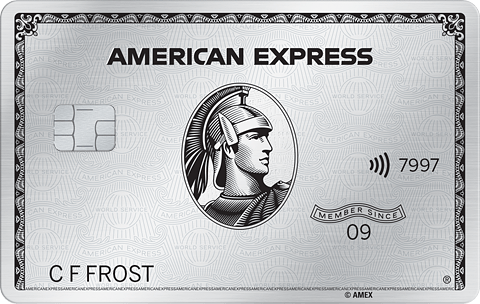
Amex Platinum · $895live feeThe fee, at a glance · Amex Platinum
Issuer-published annual fee · tracked live from CardDecide's dataset
2025 → 2026
There it is on the statement, two hundred dollars heavier than the year before: an $895 annual fee on a card you signed up for at $695. If you opened the Platinum before September 18, 2025, this is the moment American Express told you was coming: the new fee applies at your first renewal on or after January 2, 2026. The short answer to "is it still worth it" is a worksheet, not a verdict. Keep the card only if the credits you will genuinely use, plus the lounge access and 5x flight earning you would otherwise pay for, add up to more than $895. Frequent travelers who work the credit calendar clear that bar. If your honest capture sits under roughly $600, the same worksheet will point you toward a retention offer or a downgrade instead. Four steps, three profiles, one decision.
Start With the Timeline, Not the Benefits
Most renewal guides skip the part that determines everything else: when this fee actually applies to you. American Express announced the $895 fee and the expanded credit lineup on September 18, 2025, and built in a transition window. Accounts opened before the announcement keep the $695 fee until their first renewal on or after January 2, 2026, at which point the $895 fee takes over (American Express newsroom, September 18, 2025; the issuer's fee page still confirmed $895 as of July 17, 2026).
Two practical consequences follow. First, by late August 2026, nearly every pre-refresh cardmember has already seen the new fee or will see it at the next anniversary date, so if you are renewing now, this is your first $895 cycle. Second, the fee increase and the benefit increase arrived together: the hotel credit grew from $200 to $600, the digital entertainment credit from $20 per month to $25, and Amex added new credits for Resy, lululemon, Uber One, and OURA. The question is not whether the card got richer on paper. It did. The question is whether your life intersects with that paper.
One more timeline item belongs here: the Delta Sky Club access cycle runs February 1 through January 31, and the ten-visit annual cap resets on that schedule, not on your card anniversary (delta.com policy, current 2026). If your renewal month and your lounge cycle are out of sync, count visits across the Delta year, not the card year.
1Count the Credits You Will Actually Use
Write down every credit, its mechanics, and a yes-or-no answer to one question: would I use this even if no one reminded me? Amex markets "over $3,500 in value" (its own claim, September 18, 2025), and the arithmetic behind that claim is real, but it assumes perfect, intentional usage of every dollar. Real cardmembers forget quarters, miss semiannual windows, and decline to prepay hotels. Build your list from this table, then be ruthless about the yes-or-no column.
| Credit | Annual amount | What it takes to use |
|---|---|---|
| Hotel (Fine Hotels + Resorts / The Hotel Collection) | Up to $600, $300 per half-year | Prepaid booking through Amex Travel; Hotel Collection stays need a two-night minimum |
| Resy | Up to $400, $100 per quarter | Enrollment; eligible purchases at participating US Resy restaurants |
| Digital Entertainment | $300, $25 per month | Enrollment; qualifying services include Paramount+, YouTube Premium, YouTube TV, Disney+, ESPN, Hulu, NYT, Peacock, WSJ |
| lululemon | Up to $300, $75 per quarter | Enrollment; US stores (outlets excluded) or lululemon.com |
| Uber One membership | $120 | Statement credit against an auto-renewing Uber One membership |
| Uber Cash | $200 ($15 monthly, $20 December bonus) | Uber and Uber Eats spend |
| OURA | Up to $200 | Enrollment; purchase through OURAring.com |
| Airline fee | Up to $200 | One selected airline; incidental charges only; calendar-year basis |
| Saks Fifth Avenue | $100, $50 per half-year | Two semiannual windows |
| Equinox | Up to $300 | Club membership or Equinox purchases |
| Walmart+ | $155.40 ($12.95 monthly value) | Membership credit |
| CLEAR+ | $219 | Enrollment where CLEAR operates |
Every line above comes from Amex's benefit pages current as of mid-2026, and each carries enrollment steps, expiry windows, or both. A credit you must remember four times a year is not worth the same as cash. For a credit-by-credit audit with difficulty ratings and the stacking traps, read our companion piece on auditing every Platinum credit; here, the worksheet just needs your honest yes-or-no.
A counting rule keeps this step honest. A credit counts toward your total only if it replaces spending you were already doing or funding something you genuinely value. A $300 lululemon credit you would never spend without the credit is worth $0 to you. The same logic guts the $3,500 headline for most people, and that is fine. Your number is the only one that pays the fee.
2Price the Parts That Are Not Credits
Two benefits do not show up as statement credits, and both matter at $895. The first is lounge access: more than 1,550 lounges including 30 Centurion locations, plus up to ten Delta Sky Club visits per year when flying Delta, with the ten-visit cap removed if you put $75,000 of annual spend on the card. Reports from June 2026 also describe a five-hour pre-flight access limit at Centurion lounges, a change secondary sources attributed to crowding controls; treat it as reported rather than settled policy. The 2026 lounge landscape across all issuers went through what amounts to a guest-fee and visit-cap reset, which we track separately in the 2026 lounge access reset.
How you value lounges is personal, so make it an explicit assumption rather than a guess. If you would otherwise pay for a lounge day pass or an economy meal and drink at the terminal, a visit might be worth $25 to $40 to you. At ten Sky Club visits plus a handful of Centurion stops, a Delta-flying road warrior can reasonably book $300 or more of subjective value. A once-a-year vacationer books closer to $50. Write your number down and label it an assumption; the worksheet cannot do this for you.
The second non-credit benefit is the earn rate: 5x Membership Rewards points on flights, and on prepaid hotels booked through Amex Travel, up to $500,000 in annual spend. Scenario math shows the scale. Assume you spend $12,000 annually on flights and value Membership Rewards points at 1.5 cents each, a community-cited estimate for transfer redemptions as of early 2026 rather than any official rate. The 5x card earns 60,000 points where a baseline 1x card earns 12,000, a difference of 48,000 points, roughly $720 at the assumed valuation. Change the assumption and the answer scales with it; that is the point of labeling it. The card also now carries Leading Hotels of the World Leaders Club Sterling status, which has value only if you stay at those hotels.
3Run Your Profile
Three profiles cover most renewal situations. Find the one that looks like you, then adjust the numbers to your own habits.
A. The heavy traveler who works the calendar
This cardmember flies monthly, books two prepaid Fine Hotels + Resorts or Hotel Collection stays a year on purpose, dines at Resy restaurants, and was already paying for two streaming services the Digital Entertainment credit covers. Their capture looks like: $600 hotel, $400 Resy, $300 digital entertainment, $120 Uber One, $200 Uber Cash, $150 of the $200 airline credit (incidentals only), $219 CLEAR+, and $155.40 Walmart+. That totals $2,144.40 in credits alone, before any lounge value. Even at a 70 percent capture rate, a realistic $1,501, the $895 fee is covered with room to spare. Add assumed lounge value of $300 and Profile A keeps the card without much agonizing. For this profile the 2025 refresh was, net, a good trade: the fee rose $200 while the credit ceiling rose by far more, and this is the person positioned to collect it.
B. The occasional traveler who uses Uber and picks one airline
Here, the cardmember flies three or four times a year, grabs a lounge visit when convenient, and reliably uses the Uber bundle plus some airline incidentals. Capture: $120 Uber One, $200 Uber Cash, a realistic $100 of the airline fee credit (the incidental-only rule bites harder than people expect), and $90 of assumed lounge value at $30 per visit across three visits. Total: $510. That is $385 short of the fee. Profile B is the classic retention-call candidate: a targeted offer can bridge the gap some years, and the worksheet says to make that call before deciding. It also says to know the exit, because a bridge that does not appear points to the downgrade door.
C. The credit skeptic who will use under $400
Profile C never intended to work the calendar: signed up for the welcome offer, never enrolled in Resy or lululemon, and would count maybe $300 of digital entertainment (only because they already pay for a covered service) plus sporadic Uber Cash. Honest capture: under $400, against an $895 fee. No lounge assumption rescues that gap. Profile C should not renew at full price, and the only real questions are which exit and in what order: retention call first (it costs nothing but twenty minutes), then downgrade or cancel.
4Compare Your Number to the Fee
The math that matters is one line: credits you will actually use, plus assumed value for lounges and earn-rate advantage you would otherwise pay for, versus $895. If you want the arithmetic staged for you, including the credit-capture percentages most comparisons skip, run your line items through our annual-fee calculator after you finish the worksheet; our companion explainer on the annual-fee break-even method covers the same logic step by step.
Bands, not verdicts, follow; your spend, home airport, and tolerance for enrollment chores move the lines.
| Your honest annual capture | What the math tends to say |
|---|---|
| $1,500 or more | The fee is covered several times over; renewing is defensible on numbers alone |
| $900 to $1,500 | Covered, but thin if you skip the calendar work in any single category |
| $600 to $900 | Gray zone; a retention offer decides most of these cases |
| Under $600 | The fee is not being met; downgrade or cancel after the retention call |
The Three Doors, in Order
Door one is keeping, and it belongs to Profile A. Door two is downgrading, and the Platinum's ladder runs to the Gold card at $325, which carries up to $424 in dining-side credits ($120 dining, $120 Uber Cash, $84 Dunkin, $100 Resy) that suit a homebody better than the Platinum's travel stack; the Green card at $150 is the other historical target, but Amex suspended new Green applications in August 2026 per secondary reporting, and whether product changes into the Green still work is not confirmed. Verify with the issuer before counting on that path. Our full Amex Platinum downgrade options guide walks the ladder, including the rule that product changes never come with welcome bonuses and Amex's once-per-lifetime bonus limit constrains the reapply-later strategy.
Door three is the retention call, and timing matters: leverage is highest right after the annual fee posts (NerdWallet, March 18, 2026). Amex handles these through chat in the app or the retention line at 800-452-3945. Community reports from 2026 describe a most-common offer of 15,000 points for $3,000 of spend over three months, with 25,000 to 50,000 point offers and $150 statement credits also appearing, and one reported 100,000-point offer to a $121,000-a-year spender. These are account-specific reports, not policy, and they are never guaranteed. One trap deserves its own warning, documented in March 2026: Amex has offered to let cardmembers pay the annual fee with points at one cent each, meaning 89,500 points for the $895 fee, when community estimates put transfer redemptions at 1.5 cents or more. That offer is a poor use of points for almost everyone. Our Amex Platinum retention playbook covers scripts and timing in detail.
One sequencing rule applies before any cancellation, and Profile C should read it twice. Membership Rewards points are forfeited immediately if you close your only MR-earning card, per American Express's own FAQ, so a cancellation requires either another MR card in the wallet or a transfer of the balance to airline and hotel partners first. A downgrade to Gold sidesteps the problem entirely, because the points never leave the program. The skeptic's order of operations is therefore fixed: retention call first, downgrade if the Gold card's credits fit better, transfer any stranded points, and only then close the account.
Whichever door your worksheet points to, walk it before the anniversary, not after the fee has aged three months. The card got objectively richer in 2025 and objectively more demanding: it now requires a cardmember who will book prepaid hotels, enroll in four credits, and fly enough to matter. If that is you, $895 is defensible. If it is not, the worksheet has already told you, and the other two doors are open.
Sources & provenance
- American Express newsroom, "There's Nothing Like Platinum" — $895 fee announcement, renewal timing for pre-September 2025 accounts, expanded credit lineup, "over $3,500" value claim (americanexpress.com, September 18, 2025)
- American Express Platinum fee and benefits pages — current $895 fee, credit mechanics and enrollment requirements (americanexpress.com, viewed July 17, 2026)
- CNBC — coverage of the 2025 premium card fee increases and Delta Sky Club access policy changes (cnbc.com, 2025)
- Roaming Cactus — independent review corroborating credit lineup and usability (roamingcactus.com, April 2026)
- TravelUpdate — retention offer paying the fee with points at 1 cent per point; 89,500-point cost at $895 (travelupdate.com, March 19, 2026)
- Travel on Points — 2026 Amex retention offer compilation, most-common and outlier offers (travel-on-points.com, August 20, 2026)
Figures are sourced from issuer pages and community reports, verified on the dates shown, and may have changed. Always confirm current terms with the issuer. Not financial advice.
Keep reading
All articlesTheory is cheaper than the fee.
Run your own card through the same equation in about two minutes.
Check my card