Venture X renewal math after lounge cuts
You found out at the lounge door.
CardDecide EditorialThe Fee Ledger2026Re-verify by Nov 2026
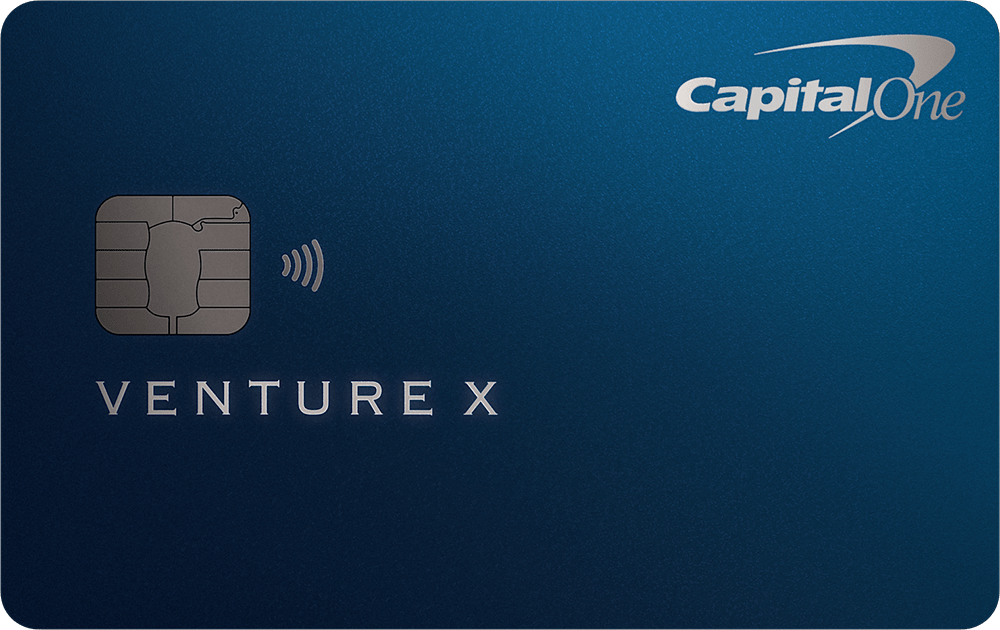
Venture X · $395live feeYou found out at the lounge door. The agent taps the screen, apologetic, and mentions a $45 guest fee that was never there before, because on February 1, 2026, Capital One ended the Venture X's most generous quiet perk: bringing people along for free. If you travel alone, almost nothing about this card changed, and the renewal math still leans clearly in its favor. If you travel with a partner several times a year, the guest fees can quietly add $200 to $400 to your real annual cost, which moves this from "the cheapest premium card" to "a card priced like a Sapphire Reserve without the Reserve's credits." And if you put $75,000 a year on the card, the old guest benefit returns. Your travel pattern, not the $395 headline fee, decides which sentence is yours.
What exactly changed on February 1, 2026
Your own access survived untouched: the fee stayed $395 and the primary cardmember's entry to Capital One Lounges, Capital One Landings, and Priority Pass remained free. What changed is everyone who is not you (capitalonetravel.com lounge guide, current 2026; Daily Drop, April 9, 2026).
| Who or what | Before February 1, 2026 | From February 1, 2026 |
|---|---|---|
| Your own lounge access | Free, all three networks | Unchanged: still free |
| Guests at Capital One Lounges | Free | $45 per adult, $25 per child (ages 2 to 17), under 2 free, unless you spent $75,000+ in the prior calendar year |
| Guests through Priority Pass | Free | $35 per guest |
| Authorized user lounge access | Free | $125 per year per user to restore, covering Capital One Lounges, Landings, and Priority Pass after enrollment |
| Authorized user card fee | None (up to 4 AUs) | Still no card fee; only lounge access carries the $125 |
| Venture X Business | Two free Priority Pass guests | Kept: two free, then $35 each |
Two footnotes matter. The $75,000 threshold runs on prior calendar-year spend, so your 2025 spend counted for your 2026 guest access, and you can watch your progress in Capital One's Spending Insights Tool inside the app. And the spend threshold waives guest fees at Capital One's own lounges; Priority Pass guests remain $35 each under the current guide, so heavy spenders are not fully back to the old world.
If you fly solo: your card is essentially unchanged
Start with the floor, because every scenario below is just the floor plus or minus guests. The Venture X charges $395, returns a $300 annual travel credit on bookings made through Capital One Travel, and deposits 10,000 bonus miles each account anniversary, which Capital One's own card page frames as about $100 toward travel (that framing implies the issuer's one-cent-per-mile rate toward travel booked through the portal; your realized value can differ if you transfer miles to partners, so treat the $100 as the conservative cash-out framing, not a market valuation).
Run the arithmetic: $395 minus $300 minus $100 is negative $5. Label it clearly as our arithmetic on stated values, not an issuer claim, and notice what it means. A solo traveler who books at least $300 of travel through the portal each year is holding premium lounge access, Priority Pass membership, 2x miles on everything, 5x on hotels, rental cars, and flights booked through Capital One Travel, and up to $120 in Global Entry or TSA PreCheck fee credits, for a net cost somewhere between negative $5 and $95 even before valuing a single mile above cash-out. There is also a current 75,000-mile welcome offer on the card, framed by Capital One as $750 toward travel, which matters to whoever inherits your referral, not to your renewal.
For solo travelers, the renewal question answers itself unless the portal-booking requirement genuinely grates. If you refuse to book through Capital One Travel on principle or price, the $300 credit stops being money and the math degrades fast; that is a preference variable, not a rounding error, and it belongs in your decision.
One middle case deserves its own arithmetic before we move to couples. A solo traveler who guests a friend or parent twice a year faces $70 to $90 in guest fees, which lands the effective cost at roughly $465 to $485 before credits and about $65 to $85 after the $300 credit and the anniversary miles at the issuer's framing. That is still a cheap premium card, and the February changes are a shrug at this visit count. The cliff starts somewhere around four to six guest visits a year, which is why the next section assumes six.
Traveling as a couple: the quiet effective fee increase
Now add one guest, your partner, on trips. Scenario assumptions: you two fly together six times a year and visit a lounge on most of those trips. At Capital One Lounges, guest entries cost $45 each, so six visits run $270. Through Priority Pass, the same six guest entries run $210 at $35 apiece. Call it roughly $210 to $270 a year in charges that did not exist before February 2026, before counting children old enough to need their own seat.
This is what we mean by a quiet effective fee increase. The headline fee is still $395, the brochures still say $395, but the price of your actual behavior, traveling as a pair, rose by the guest total. In this scenario your effective annual cost is $665 before credits, and if your partner also had a card as a free authorized user and wants lounge access back, add $125, for $790. Run the same math at four trips instead of six and the damage is $140 to $180, real but absorbable. Run it at ten visits and the card is effectively an $845 product for your household. The couple-specific number is the whole story, which is why blanket verdicts about this card are now useless.
Families feel it hardest, and the per-head math is worth spelling out. A family of four, one cardmember, one adult guest, two children ages 2 to 17, pays $45 plus $25 plus $25, which is $95 per Capital One Lounge visit, or $105 through Priority Pass at three guests times $35. Six airport lounge visits a year with the kids runs $570 to $630, at which point the Venture X's effective cost exceeds the Amex Platinum's headline fee before a single credit is counted. One adult guest with no children is the gentle case; every additional seat at the table adds $25 to $45 per visit, per trip, all year.
| Couple's lounge visits per year | Adult guest at Capital One Lounges ($45) | Adult guest via Priority Pass ($35) | Family of four, Capital One route ($95) |
|---|---|---|---|
| 2 | $90 | $70 | $190 |
| 4 | $180 | $140 | $380 |
| 6 | $270 | $210 | $570 |
| 10 | $450 | $350 | $950 |
A routing habit softens the bill slightly: when an airport has both a Capital One Lounge and a Priority Pass lounge, the guest through the Priority Pass door costs $35 against $45, so a couple that checks both networks before walking saves $10 per adult visit, and the solo cardmember is free either way. Small money per trip, but it is the difference between the $210 and $270 columns above, captured with thirty seconds of app-checking.
At an effective $665 to $790, comparison shopping stops being optional, because you are paying Reserve and Platinum money. The Chase Sapphire Reserve at $795 brings a $300 anniversary-year travel credit that works on ordinary travel purchases without a portal, plus its own lounge networks, though its authorized users now cost $195 each. There is a couple-specific wrinkle in that comparison: at Sapphire Lounges, official Chase policy gives the cardmember one free guest, so a pair traveling together enters at no guest charge there, while Priority Pass locations under the same card charge $35 per guest. Scenario arithmetic on stated rates: a couple doing six trips, crediting the Reserve's automatic $300, sits near $495 effective if their airports have Sapphire Lounges and near $705 if they land in Priority Pass rooms instead, against the Venture X couple's $665. Which card wins depends entirely on which lounges exist where you fly, which is a map question, not a card question. The Amex Platinum at $895 stacks over $3,000 in listed credits and Centurion plus capped Delta Sky Club access, at more than double the Venture X's headline fee. Neither is automatically better for a couple; both are better than the Venture X only if your effective guest-inflated cost has closed the gap. If you hold more than one of these cards already, the overlap question, which card's benefits the others duplicate, is the actual decision, and we work through it in keeping multiple premium cards.
Spending $75,000 a year: the old perk returns
Capital One preserved the pre-2026 experience for its biggest spenders, with a threshold instead of a status tier. Spend $75,000 or more in a calendar year and your Capital One Lounge guests are free again for the following year. The mechanics favor planners: the lookback is calendar-based, your 2025 spend governed 2026 access, and the Spending Insights Tool shows where you stand mid-year rather than making you guess.
Be precise about what the threshold buys. It waives guest fees at Capital One Lounges and Landings; it does not waive the $35 Priority Pass guest fee under the current published guide, and it does not restore free lounge access for authorized users, who still need the $125-per-user enrollment. A household with two travelers that naturally puts $75,000 a year on the card gets the closest thing to the old card. A household inflating spend to hit the threshold is paying $75,000 for a few hundred dollars of guest fees, which fails any honest worksheet.
Earning deserves a sentence too, because it changes who lives at $75,000. At the card's 2x-on-everything rate, $75,000 of annual spend produces 150,000 miles, worth $1,500 toward travel at the issuer's one-cent portal framing, an assumption we label as arithmetic rather than a valuation. A business owner or a household routing everything through the card is generating rewards that dwarf the guest fees either way; the threshold simply hands back a perk they were always going to outgrow. For everyone else, the threshold is a benchmark to know about, not a target to chase.
When the math no longer works: three exits
Exit one is a retention call, made right after your annual fee posts, when leverage is highest (NerdWallet, March 18, 2026). Community reports compiled in August 2026 describe Capital One retention offers including a $200 travel credit after $2,000 of spend over three months, and a $100 travel credit, with some Venture and VentureOne holders reporting waived annual fees. These are account-specific reports, not published policy and not a menu, so treat them as a sense of the range rather than a promise of any particular outcome. Our credit card retention offers for 2026 page tracks the datapoints with dates.
Downgrading is the second exit, and the Venture X ladder is short and clean. The Venture card at $95 keeps 2x miles on everything; VentureOne at $0 earns 1.25x and keeps the card open for your credit file. Capital One's own education pages describe product changes as typically not requiring a hard credit inquiry, note that the changed card is generally not eligible for promotional APRs or welcome offers, and confirm what the CARD Act already implies: changes that raise an account's fee are effectively barred in the first twelve months, while fee-lowering downgrades proceed normally. The full walk-through, including which card to pick and when, is in our Venture X downgrade guide.
Cancellation inside a refund window is the third exit, and here we flag a gap rather than a fact: the exact window in which Capital One refunds a freshly posted annual fee on cancellation is not confirmed in our research. Verify with the issuer before assuming anything; if a window exists, it is measured in weeks, not quarters, and it starts when the fee posts.
Before choosing among the exits, run your own numbers the way this article did: your fee, your travel credit capture, your miles at the issuer's cash-out framing, and, the new line everyone forgets, your realistic annual guest count times the correct fee for your lounge mix. Our annual-fee calculator stages exactly that arithmetic, guest fees included, and the answer it produces for a solo traveler and a couple with six trips will differ by hundreds of dollars on the same card.
The Venture X of 2024 was the easiest keep in the premium tier because its generosity was unconditional. The 2026 version rewards two specific households: solo travelers, who still get a nearly free premium card after credits, and $75,000 spenders, who bought back the old guest policy with volume. Everyone in between now has homework, and for couples the homework starts with a count of last year's trips. Six visits, one partner, $270: that is the number that decides whether this renewal is a shrug or a switch.
Sources & provenance
- Capital One Travel lounge guide — guest fees at Capital One Lounges ($45 adult / $25 child), Priority Pass guest fee ($35), authorized user lounge access at $125, the $75,000 prior-calendar-year spend threshold (capitalonetravel.com, current as of 2026)
- Daily Drop — details of the February 1, 2026 Venture X lounge benefit changes (dailydrop.com, April 9, 2026)
- Capital One Venture X card page — $395 fee, $300 travel credit, 10,000 anniversary miles framed as roughly $100 toward travel, 2x and 5x earn structure, 75,000-mile welcome offer framing (capitalone.com, current as of 2026)
- Capital One education pages on product change — no hard inquiry typically, changed cards not eligible for promotional offers, first-year fee-increase limits (capitalone.com, December 2, 2025 and March 10, 2026)
- Travel on Points — Capital One retention datapoints: $200 travel credit after $2,000 spend, $100 credit, fee-waiver reports (travel-on-points.com, August 20, 2026)
- NerdWallet — retention timing, leverage highest immediately after the annual fee posts (nerdwallet.com, March 18, 2026)
Figures are sourced from issuer pages and community reports, verified on the dates shown, and may have changed. Always confirm current terms with the issuer. Not financial advice.
Keep reading
All articlesTheory is cheaper than the fee.
Run your own card through the same equation in about two minutes.
Check my card