Marriott free night award, explained
The anniversary email arrives with a certificate attached: one free night award, redeemable at properties priced at up to 35,000 points.
CardDecide EditorialThe Fee Ledger2026Re-verify by Dec 2026
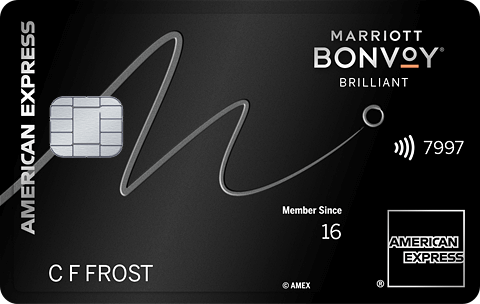
Marriott Brilliant · $650live feeThe fee, at a glance · Marriott Brilliant
Issuer-published annual fee · tracked live from CardDecide's dataset
2018 → 2026
The anniversary email arrives with a certificate attached: one free night award, redeemable at properties priced at up to 35,000 points. A few weeks later, the $95 annual fee posts on the Marriott Bonvoy Boundless. If you have held the card for a while, you may have stopped asking what the certificate actually buys, because award pricing stopped being simple a couple of years ago.
The core answer: the Boundless at $95 clears its fee in almost any year you use the certificate on a hotel night you would have paid for anyway at a property pricing at or under 35,000 points. The certificate is a cap, not a wildcard. When a property's award price floats above the cap, you either pay the point difference or pick another night. And if you hold the Bevy at $250, the same certificate sits behind a $15,000 annual spend gate, which is the real renewal question for that card. What follows is the mechanics, the math, and the ladder.
Where does the certificate come from, and what does it cover?
Marriott's card pages lay out the current structure (checked August 2026). The Boundless, at a $95 annual fee, delivers one free night award every account anniversary, redeemable for one night at hotels with a standard award rate of 35,000 Bonvoy points or less. It also carries Silver Elite status, which is a thin tier: late checkout where available and a small earn bonus, worth little on its own.
The phrase that matters is "up to 35,000 points." A free night award is not a coupon for any room in the system. It is a coupon for rooms whose point price, on the night you want, comes in at or under the cap. Marriott Bonvoy uses dynamic award pricing, meaning the point cost of a given room moves with demand rather than sitting on a fixed category chart. The same hotel can price at 28,000 points on a February Tuesday and 55,000 on a Friday in October.
That dynamism cuts both ways, and this is where certificate holders actually have an edge. On nights when demand is soft, award rates drift down below what the cash rate implies, and a 35,000-point cap covers a wide band of mid-tier properties: suburban full-service hotels, solid airport properties, plenty of Courtyards and similar. Traveling off-peak, or even off-night (Sunday arrivals are chronically underrated), stretches the certificate upmarket. The failure mode is the opposite: a peak-season resort that floats to 50,000 or 60,000 points leaves the certificate short, and you decide whether to top up or save it.
| Card | Annual fee | Free night award terms |
|---|---|---|
| Bonvoy Bold | $0 | No award; Silver Elite; the downgrade floor |
| Bonvoy Boundless | $95 | 1 award each anniversary, up to 35,000 points |
| Bonvoy Bevy | $250 | Award only after $15,000 calendar-year spend; Gold Elite plus 15 elite night credits |
| Ritz-Carlton card | $650 | Annual award up to 85,000 points after the renewal month |
Two clarifications people miss. First, taxes and fees on the award night are generally the member's responsibility; the certificate covers the room's point cost, not the add-ons. Second, the certificate carries an expiration date of roughly a year from issuance, per the award terms, whether or not you touch it. A certificate that expires unused is worth exactly nothing, which makes it one of the easiest benefits in travel cards to lose through pure inertia.
Placement is a skill, and it is learnable in an evening. The method: search your destination on the dates you want, filter to award availability, and read the point prices as a demand map. Properties at or under 35,000 on your dates are certificate-eligible, full stop. When nothing qualifies, shift the inquiry: a night earlier or later, a property one tier down, a suburban location instead of the downtown flagship. Award pricing under the cap commonly covers a wide band of solid mid-tier properties on standard and off-peak nights, so flexibility in location or timing usually finds a home for the certificate within a few searches. The cardholders who complain their certificate never covers anything are usually searching one hotel on one set of dates and concluding the benefit is hollow. It is not hollow; it is narrow, and narrow benefits reward planning.
How do you value a certificate honestly?
The clean method: the certificate is worth the cash rate of a night you would have booked anyway, at a property whose award price fits under the cap. Not the highest cash rate the certificate could ever cover. Not some theoretical maximum redemption. What you would have paid, at a hotel you would have chosen regardless.
Scenario one, the city weekend. Assume you have an October weekend in Chicago, the hotel you'd pick is $250 a night cash, and its award price that weekend is 30,000 points. The certificate replaces a $250 outlay. That is its value: $250, achieved with zero point top-ups, against a $95 fee. The Boundless paid for itself twice over before we discuss anything else the card does.
Scenario two, the peak property. Assume a spring-break resort week where the cash rate is $450 and the award price floats to 50,000 points. The certificate covers the first 35,000 and you pay the 15,000-point difference out of your Bonvoy balance. Now the arithmetic: you acquired a $450 night for 15,000 points, which works out to three cents per point on the incremental spend. Whether that trade is good depends on what else you'd do with those points, but as a marginal purchase of hotel nights, that math is hard to beat. The alternative, worth stating, is declining the top-up and holding the certificate for a standard-band night later. Both are defensible; the mistake is paying the difference reflexively without noticing you made a purchase decision.
There is a third scenario worth naming because it is common: the certificate that never gets used. If your travel is opportunistic and you rarely commit to plans far enough ahead to place a certificate, its expected value drops toward zero no matter what the cap is. Value what you will use, not what you could.
One more use case belongs on the list because it multiplies value quietly: the long stay. Certificates apply per night, so a five-night trip can combine one certificate night with four paid or points nights, shaving the expensive night off the bill. Used this way, the certificate does not need a special trip to earn its keep; it needs to be placed on a night that already exists in your plans. If a single annual hotel stay is in your calendar, the question is never "is the certificate valuable" but "which night of this stay does it replace," and the answer is usually the most expensive one the cap can reach.
Does the Boundless earn its $95 at renewal?
Run the ledger with the same break-even method that governs every renewal decision. Fee: $95. Certificate: worth the cash rate of a covered night you'd book anyway, which in most metro and suburban markets clears $95 without drama. Silver Elite: minor. The card's hotel earn rate helps if Marriott stays are already in your spending, but check the current earn structure on the card page before pricing it; rates are a verification item, not a constant.
For most holders with one or two planned Marriott nights a year, the Boundless renews itself. The interesting wrinkle in 2026 is that Chase is actively sweetening the relationship: an official promotion running June 4 through December 31, 2026 gives a $50 statement credit after $250 of spend on the card (Chase promotion page, checked August 2026). Fifty dollars for $250 of spending you might do anyway is a genuine discount on the renewal, and it signals something larger: issuers are working harder to keep renewal-year cardholders quiet. Check the offers tab on your account before assuming your renewal is full price.
If your ledger is thin (one Marriott night a year, certificate expiring twice as often as it's used), the decision changes. The $95 is small enough that inertia is affordable, which is precisely the trap. Twenty minutes with the renewal checklist turns that inertia into a decision, whichever way it goes: use the certificate deliberately, or step down the ladder.
And the Bevy, with its $15,000 gate?
The Bevy, American Express's $250 Bonvoy card, carries the same style of certificate with two differences that matter at renewal: it only arrives after $15,000 of calendar-year spend, and the card bundles Gold Elite status plus 15 elite night credits, which fast-track status in a way Silver never will.
The spend gate is the whole ballgame. Fifteen thousand dollars is $1,250 a month through the card. Households that already route routine spending through it clear the gate without thinking, and for them the Bevy is effectively a $250 card that pays a certificate plus real status support. Households below the threshold are paying $250 for status and earn rates alone, with the certificate as a distant prospect. That is a much weaker proposition, and it is the most common mismatch we see in premium co-brand renewals: paying for a benefit architecture whose centerpiece sits behind a gate you don't pass.
The honest Bevy test has three questions. Did you hit $15,000 last calendar year? Will you hit it this year without changing behavior? And is Gold status worth the $155 premium over the Boundless to you, given your night count? Two yeses and a defensible third keep the card. Anything less, and the Boundless or the exit is the better answer.
What the status bundle actually does, briefly, because it is the Bevy's only justification when the gate is missed. The 15 elite night credits count toward Marriott Bonvoy status qualification each year, which can carry a moderate traveler a tier higher than their nights alone would. Gold Elite brings a higher earn bonus on stays plus the room-upgrade and lounge-access possibilities that vary heavily by property. None of that has a fixed dollar value; it is worth more at forty nights a year than at four, and only you know which number describes you. If the honest answer is four, the $250 fee is buying status you will not notice.
Does the $650 Ritz-Carlton card change the math?
The ladder's top rung exists and is worth understanding even if you never climb it. The Ritz-Carlton card from Amex carries a $650 annual fee and an annual free night award good at properties pricing up to 85,000 Bonvoy points, issued after the renewal month (Marriott card pages, current as of August 2026). That ceiling, not the brand name, is the product: 85,000 points reaches the upper tier of the portfolio, including properties where a single night's cash rate can dwarf a Boundless certificate's ceiling. For a traveler whose calendar includes genuinely expensive hotel nights, the jump from a 35,000 cap to an 85,000 cap is the difference between a nice discount and a paid-for flagship stay.
Two cautions before treating it as an upgrade target. Its elevated status and airport lounge benefits are part of the pitch, but the current specifics of those perks are not confirmed in our research; verify with the issuer before counting them. And the same capture discipline applies with more force: $650 against one certificate only clears if that certificate reliably replaces a night costing real money, at properties you would actually book. A bigger cap in the hands of a traveler who books mid-tier properties is just a bigger fee.
What happens to the certificate if you cancel or downgrade?
Two separate assets are in play, and they behave differently. Your Bonvoy points live in the Marriott Bonvoy loyalty program, not in the card. Cancel the card, and the points stay put; the same is true across the major hotel and airline programs. The mechanics of that, currency by currency, are laid out in what happens to your points when you cancel, and they are worth a separate read before any cancellation.
The certificate is different: it is a card-issued perk, and card-issued perks stop when the card relationship stops. Certificates can be forfeited on closure depending on their terms, and each award expires roughly a year after issuance regardless. So the sequence at renewal is fixed: use the certificate first, then decide about the card. Downgrade to the no-fee Bold and you keep the account and its credit history, drop to Silver, and stop earning future awards; the co-brand downgrade ladders piece maps when that trade makes sense. The certificate already in your account follows its own terms; confirm its fate with the issuer before any product change, because that detail is not confirmed in every scenario.
Timing the two calendars against each other matters more than people expect. The certificate arrives on the account anniversary; the fee posts on the same cycle; the certificate then has roughly a year to live. That means the day the fee posts is also the day a fresh certificate starts depreciating. Cardmembers who renew first and plan later routinely find themselves in month eleven with an unplaced certificate and a decision to make in three weeks. The fix is bureaucratic and effective: when the anniversary email lands, put a placeholder booking on the calendar for the certificate within the next quarter, even if the real trip is fuzzy. Placeholder dates can move; expired certificates cannot.
One comparison sharpens the point: Delta's companion certificate, the airline-side cousin of this benefit, behaves similarly (annual, terms-restricted, dies with inattention), and how the Delta certificate pays off is a useful cross-check if you hold both ecosystems' cards.
So should you renew?
If the certificate found a home last year and your travel looks similar, yes, and the math is not close: one well-placed night beats $95 in every major market. If you hold the Bevy, renew only if the $15,000 gate is a formality for your spending. If the certificate expired unused, the card is charging you $95 a year for a bet you keep declining, and the Bold or the exit is the cleaner position. And whatever you decide, decide before the anniversary, because the one unforgivable move is letting a certificate lapse while paying the fee that funded it.
Sources & provenance
- Marriott Bonvoy credit cards pages — Boundless $95 fee and 35,000-point anniversary award, Bevy $250 terms including Gold Elite, 15 elite night credits, and the $15,000 spend gate, Ritz-Carlton $650 and 85,000-point award, Bold $0 (https://www.marriott.com, current as of August 2026)
- Chase Marriott Boundless promotion — $50 statement credit after $250 spend, June 4 through December 31, 2026 (https://www.chase.com, checked August 2026)
- NerdWallet — Boundless card terms verification, $95 fee and award mechanics (https://www.nerdwallet.com, August 6, 2026)
Figures are sourced from issuer pages and community reports, verified on the dates shown, and may have changed. Always confirm current terms with the issuer. Not financial advice.
Keep reading
All articlesTheory is cheaper than the fee.
Run your own card through the same equation in about two minutes.
Check my card